“Work with a sustainable material” – Advanced Materials and Manufacturing
How can I integrate a unique, sustainable material into the ROAM product line?
To create a concept for ROAM, I knew I had to select a material that could stand for itself. ROAM’s aesthetic is restrained, focused on simple forms and elegant materials. PaperStone® provided an opportunity to elevate a dimensional material, designed for countertops, into multifunctional furniture. Ultimately, the object was a scale model of a side table, but options were intentionally left open for this exploratory project.
What is PaperStone®?
“Manufactured in Washington State, most PaperStone® products are certified to the Forest Stewardship Council® (FSC®) standards and certified food safe by NSF International. All of the paper used in our products is post-consumer recycled paper and old cardboard container paper. Layers of this paper are pressed into “stone” using resin made from industrial by-products that would otherwise go into the waste stream and have been specially designed to produce a hardwood-like, highly workable, non-brittle composite panel.”
[paperstoneproducts.com]
PaperStone® is also:
- Non-porous and stain-resistant
- Virtually non-absorbent
- Steel-like strength (about 45,000 PSI), yet workable with woodworking tools
- 60% post-consumer recycled paper
- FSC-certified PetroFree resin
- Silica-free, no urea formaldehyde
- Food safe and low-maintenance
Design Criteria
ROAM targets design-conscious users who value a curated, modern style and quality craftsmanship. Their offerings are in the contract/designer price bracket, bordering on bespoke (depending on brand). The customer base skews towards young and middle-aged professionals.
Therefore, the design must feature durable, finished materials in a modern style. ROAM offers items from many brands, so both indoor and outdoor furniture, as well as accessories, are available to explore.
ROAM is sculptural and approachable, with lightly softened geometric forms.
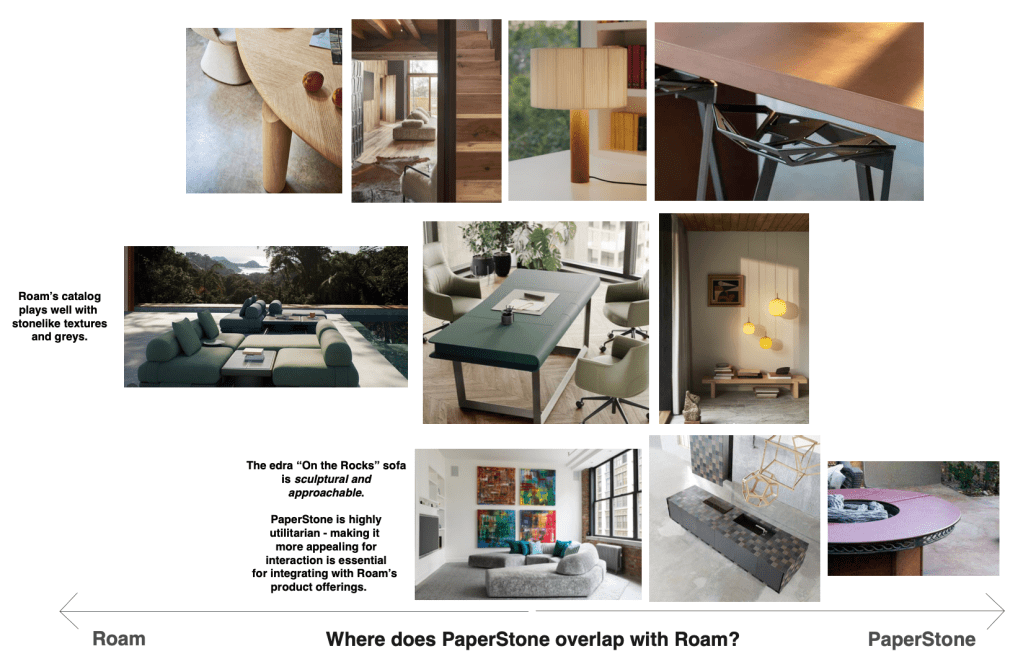
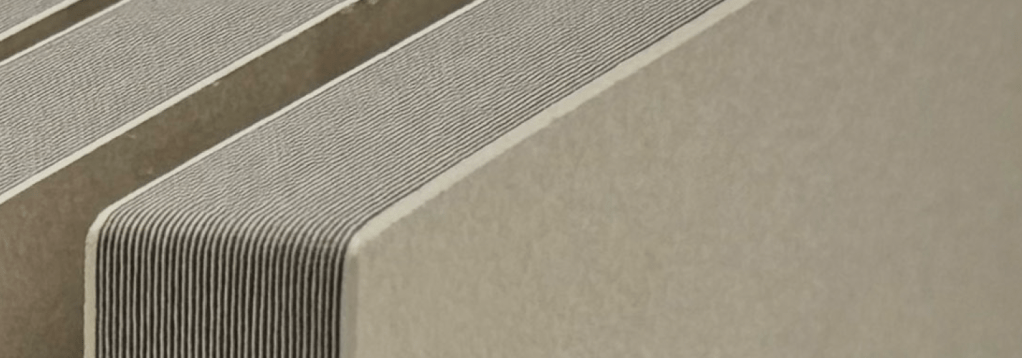
A key issue to address, considering the material, is how to create interest out of a material that only comes in (extremely) flat sheets. Rather than attempt to hide the “perfect” production of the stock, I decided to emphasize it. The edges of PaperStone® panels feature a beautiful lamination that displays the paper layers within. A sharp contrast is visible between the layers; the idea of “meta”-altering the stack comes from those layers. I began to focus on the idea of a “radiator” effect, where a purposeful play of light between layered panels is emphasized.
Picking the Series
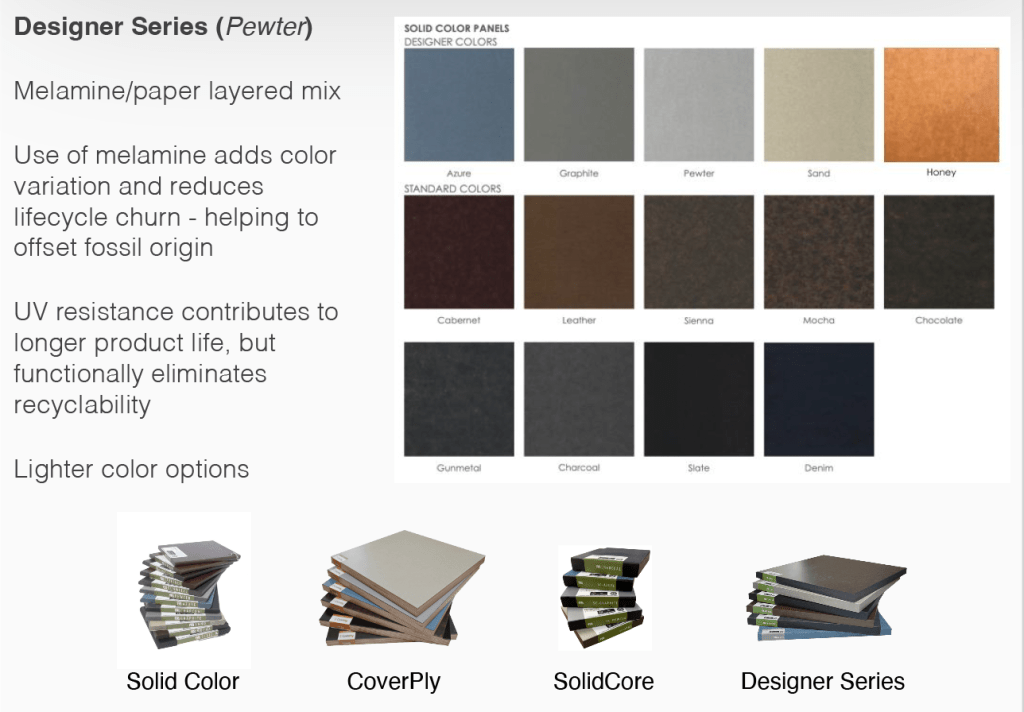
PaperStone® comes in several varieties. For this project, I was provided a sample of the designer series, which is outlined below.
Ideation
I began to ideate with the main goals of the project, defined as:
- Experiment with the “radiator” effect
- Accentuate the layered edge of the material
- Highlight one side through relief, but don’t make the object “one-sided”
- Integrate with and adapt the style of ROAM
What could it be?
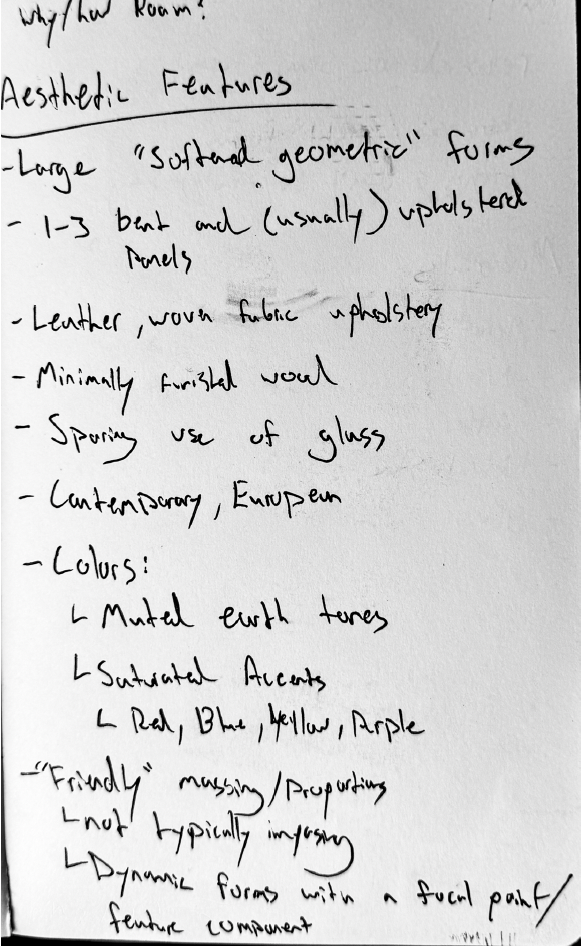
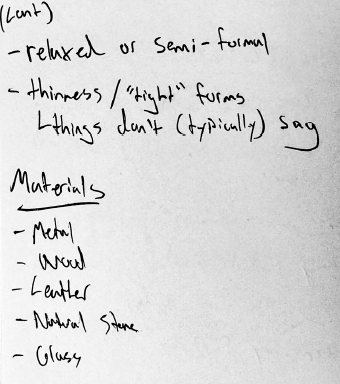
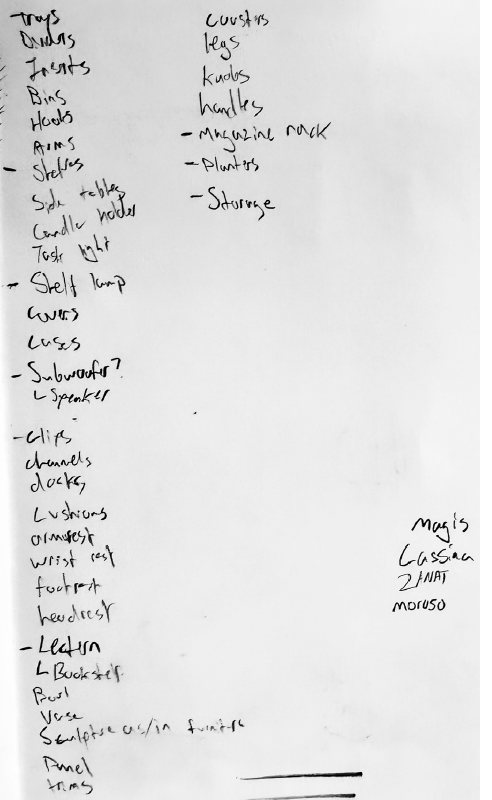
I almost always start with lists so that I can develop a range of inspirations before sketching.
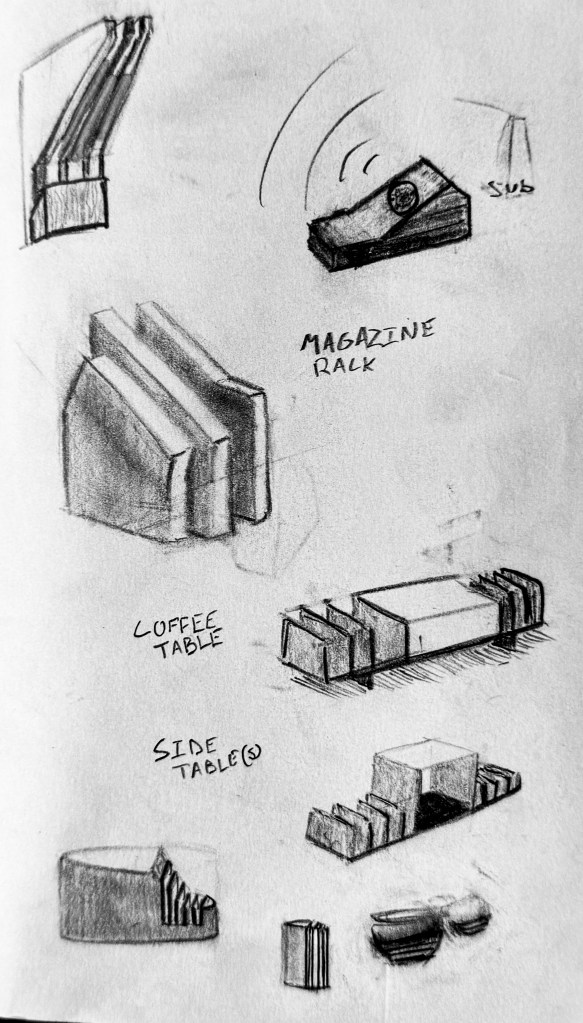
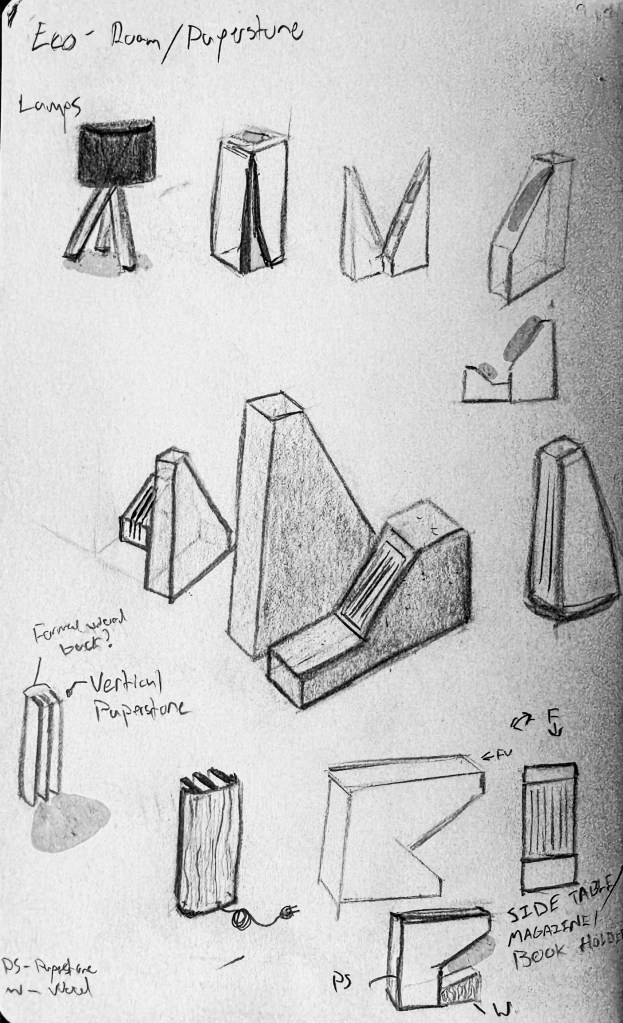
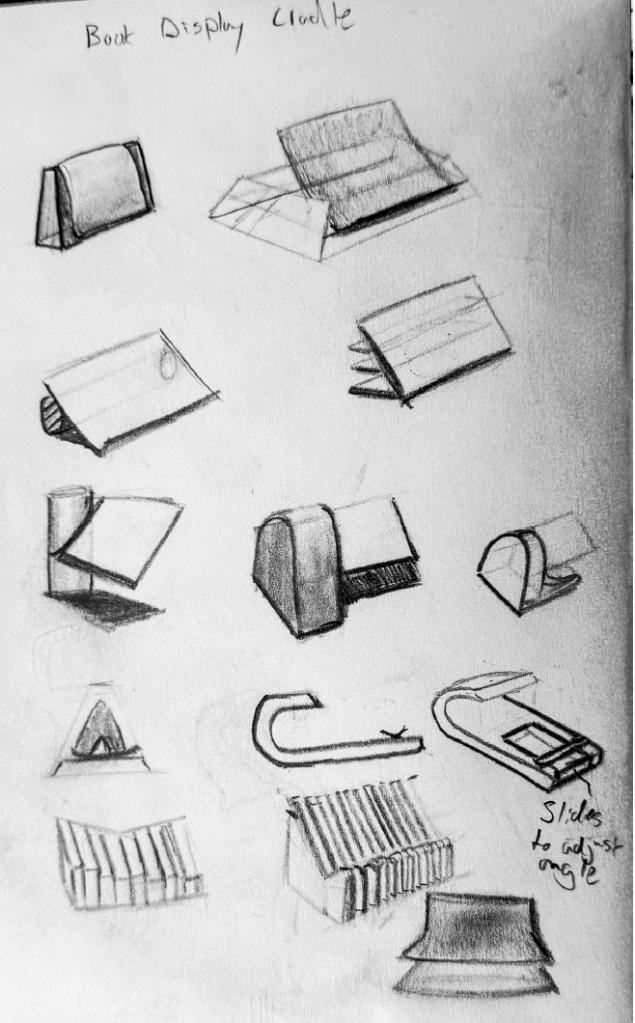
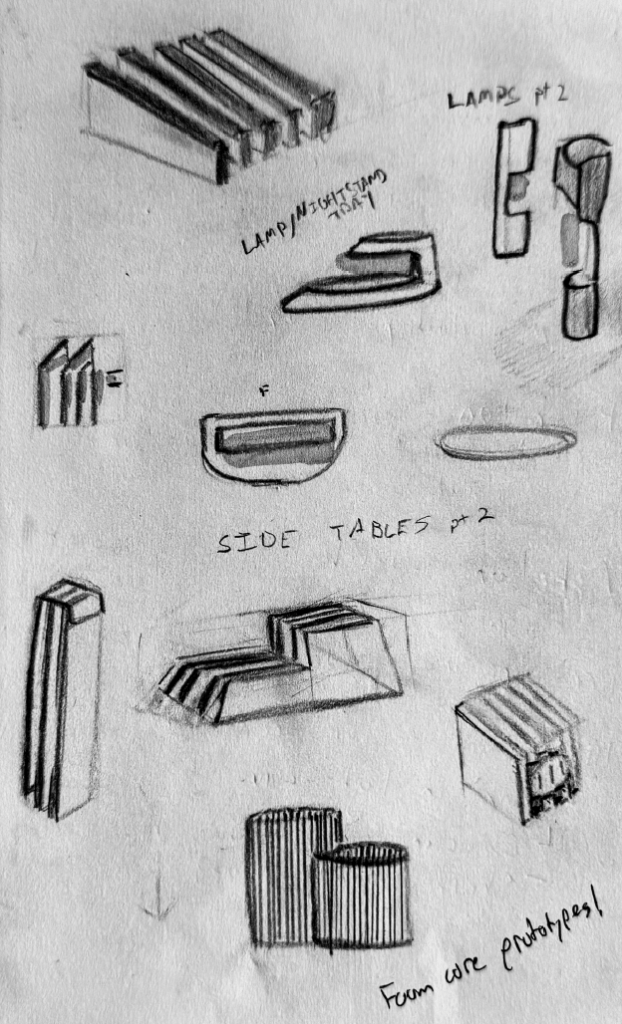
Responding to the material and the prompt, I let my mind wander on the potential possibilities for the design. I explored magazine racks, coffee tables, side tables, and lighting solutions, among others. The repetition was coming through best in the side tables, so that’s where I continued to explore.
CAD, in Fusion, was the next step. In Fusion, I moved from a taller, rectangular design into a cube. The change came about from an emphasis on multidirectionality. The original version only really had 3 unique orientations, and the details were purely aesthetic. The cube changes a few things. One side depicts a low-resolution circle in relief, just 1/8 inch below the surface plane. The relief catches light and brings a curve into play (to contrast the extremely rectilinear base form). More importantly, it provides a recess to nest glassware and other items, in the case that side becomes the “top”.
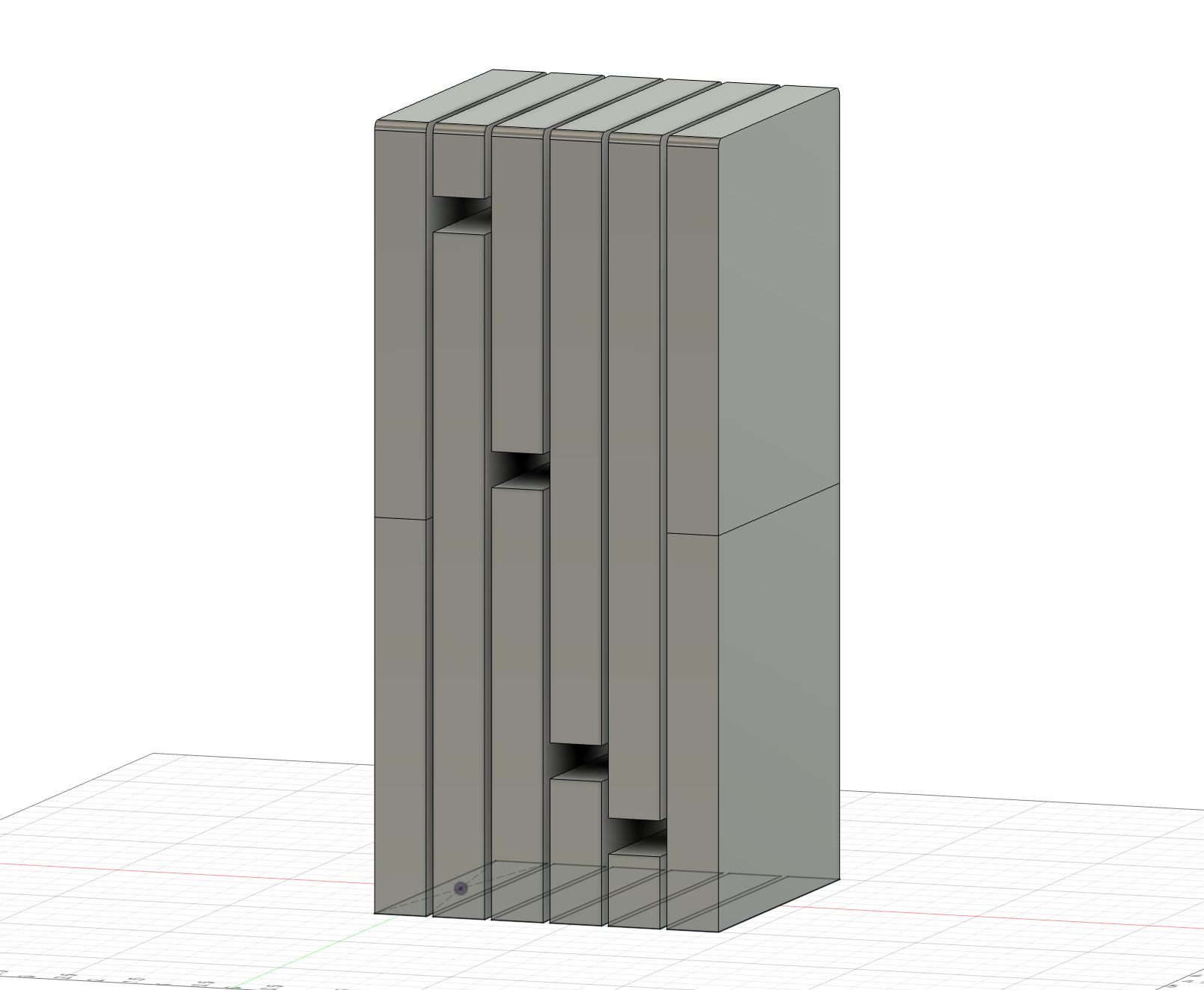
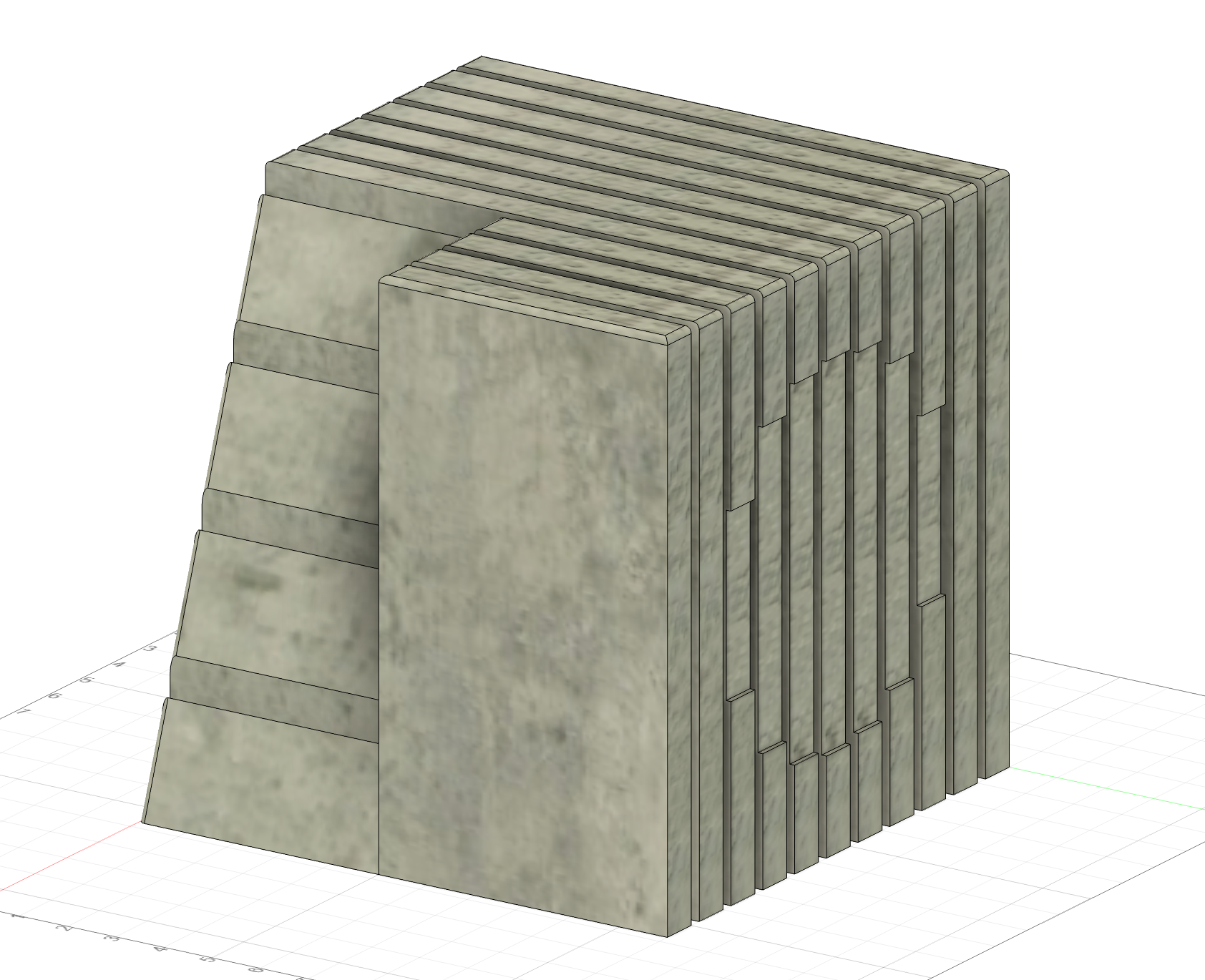
Another side is cut on a diagonal – this move allows a lamp cord to be discreetly run down the back of the table. The other sides are then, by extension, made unique. As shown, the bottom is the only face with uninterrupted square slices. The rightmost side, opposing the camera, is entirely smooth and flat, with no gaps. The diagonal slice, visible here, impacts the surface of the adjacent, leftmost face.
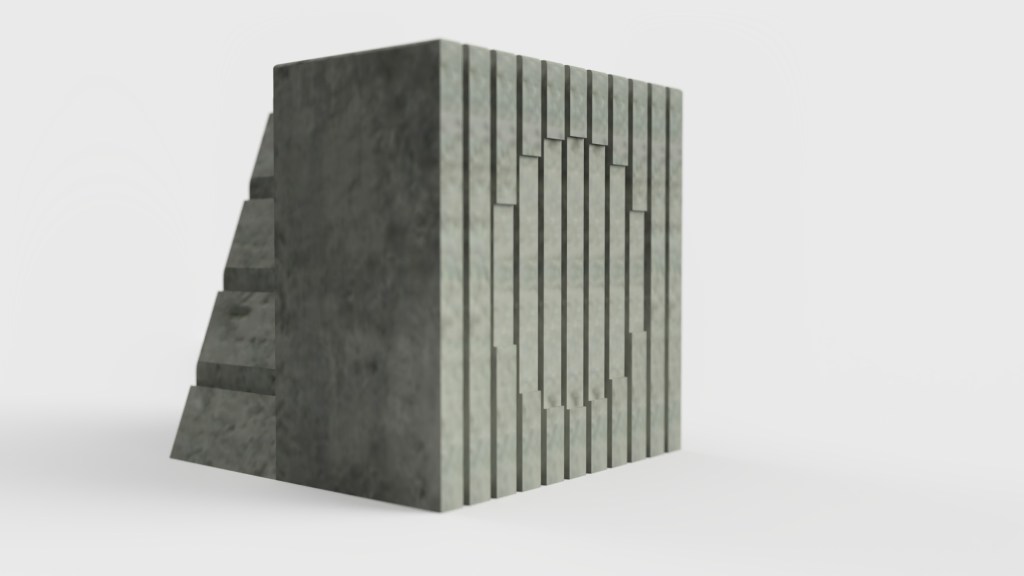
The image above best represents the design intent before physical prototyping.
Prototyping
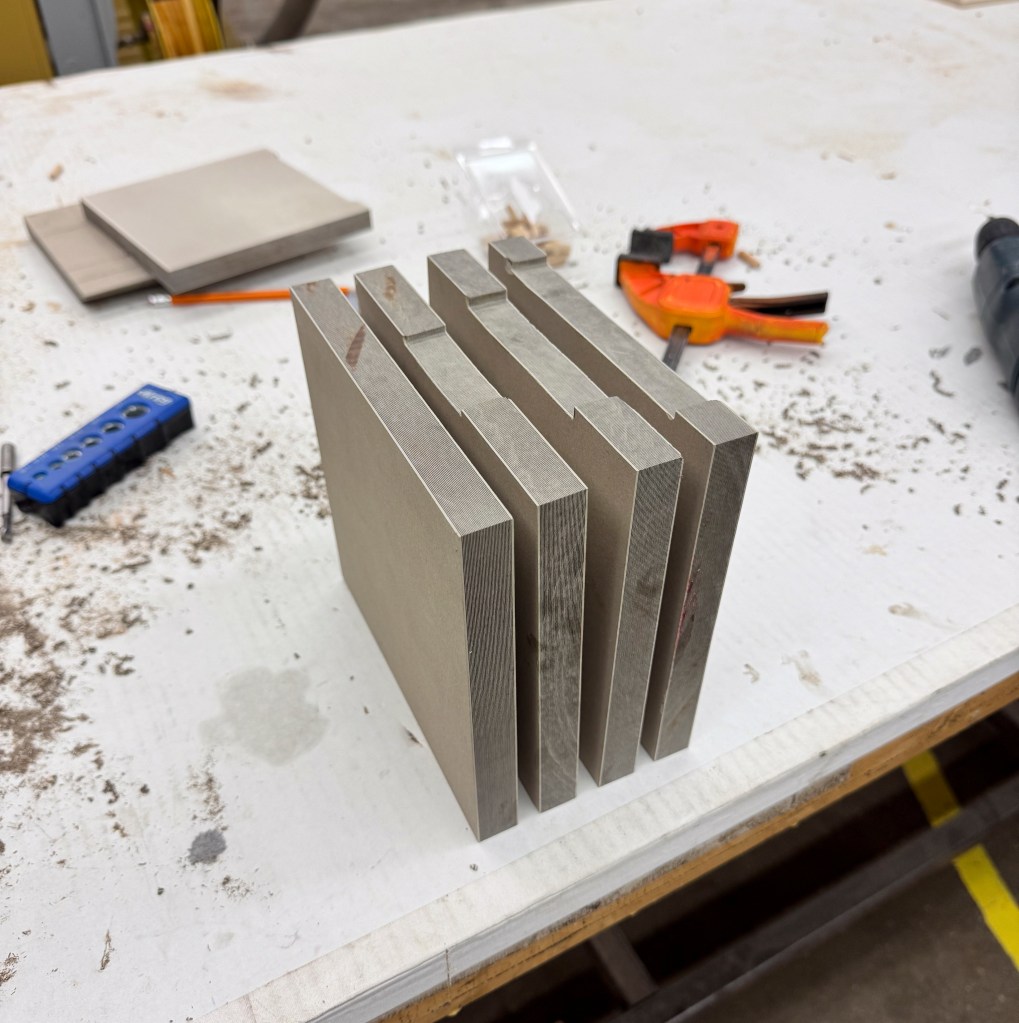
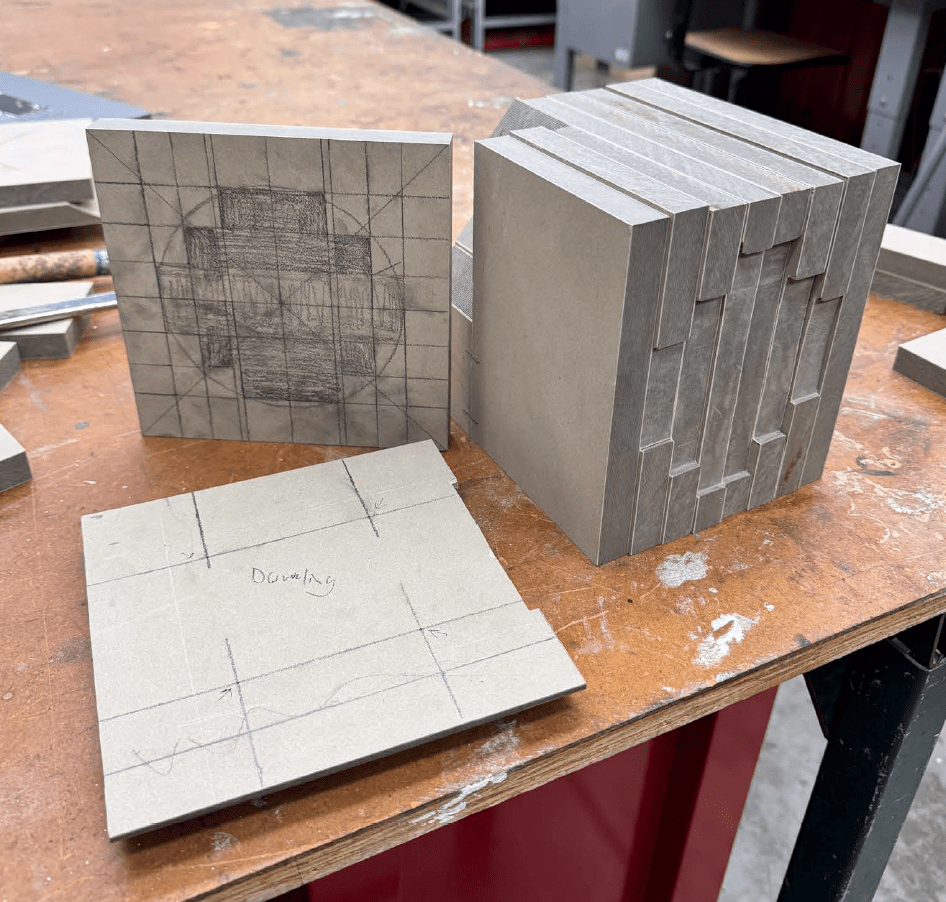
To begin the prototype, I cut the panels to a uniform square. The Relief design was cut using a combination of band sawing and hand filing. A challenge with this process was PaperStone’s tendency to chip out on the top surface when filing.
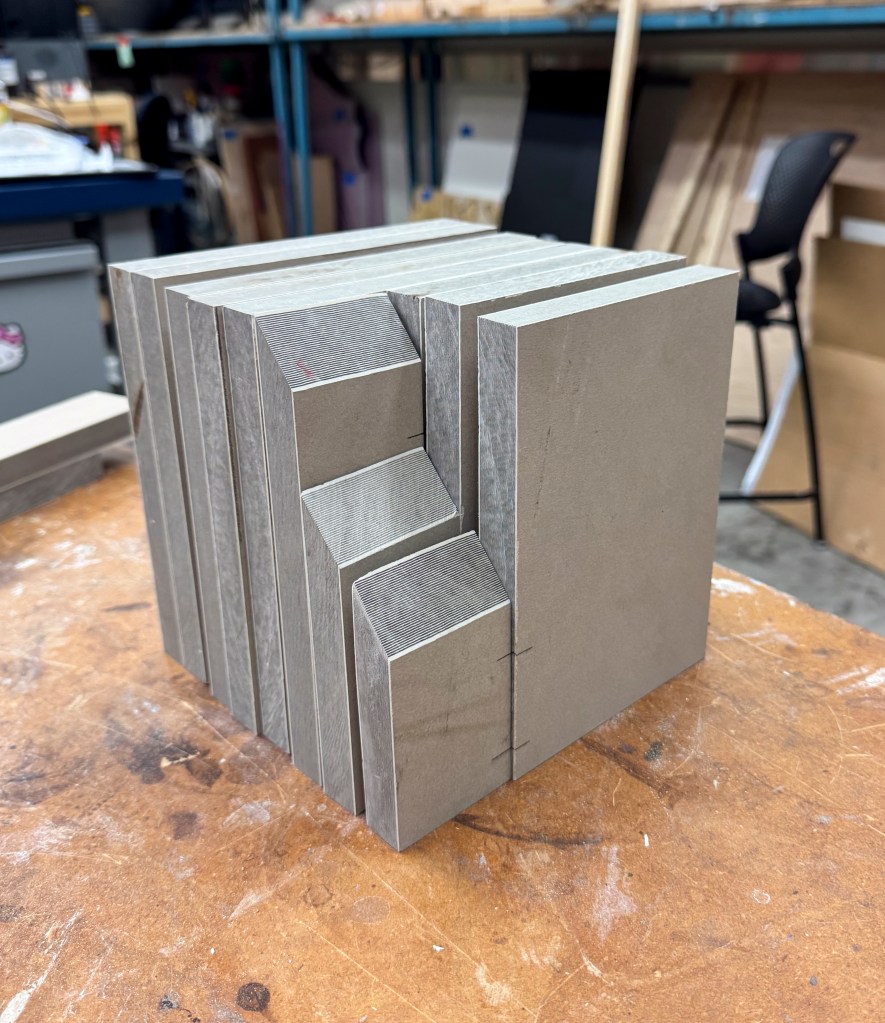
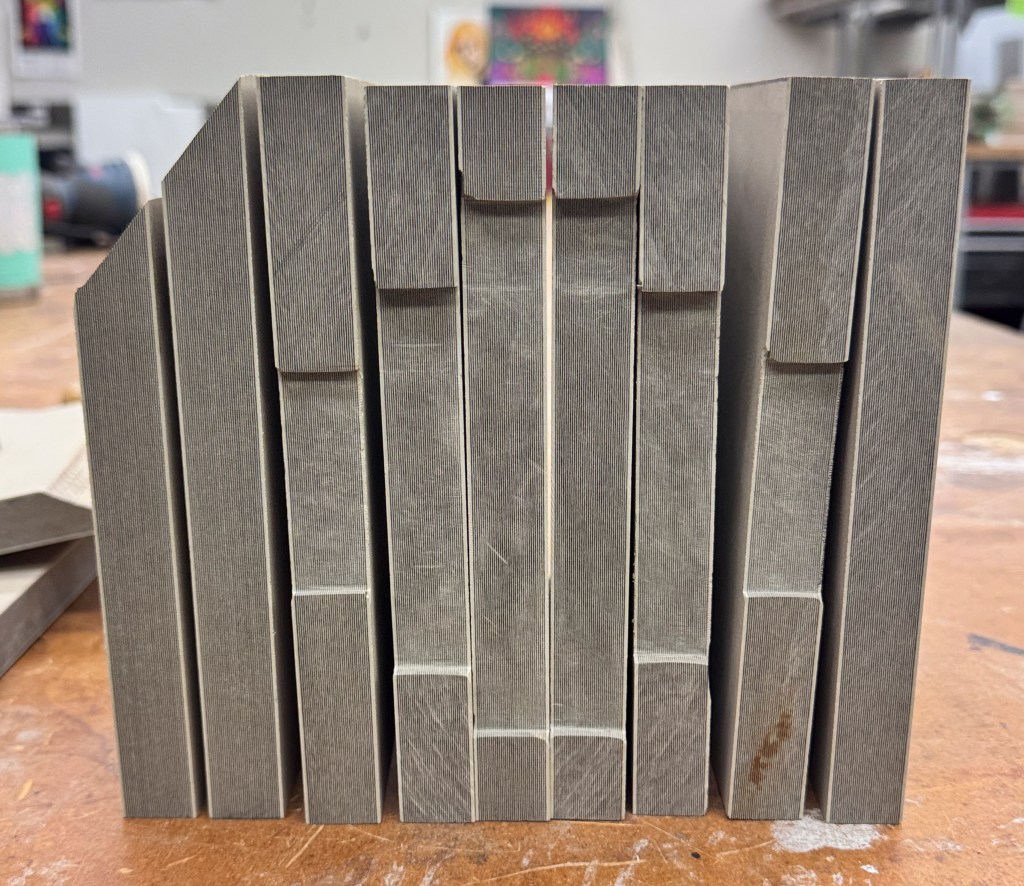
I then explored up a couple of configurations based on the extra material I had.
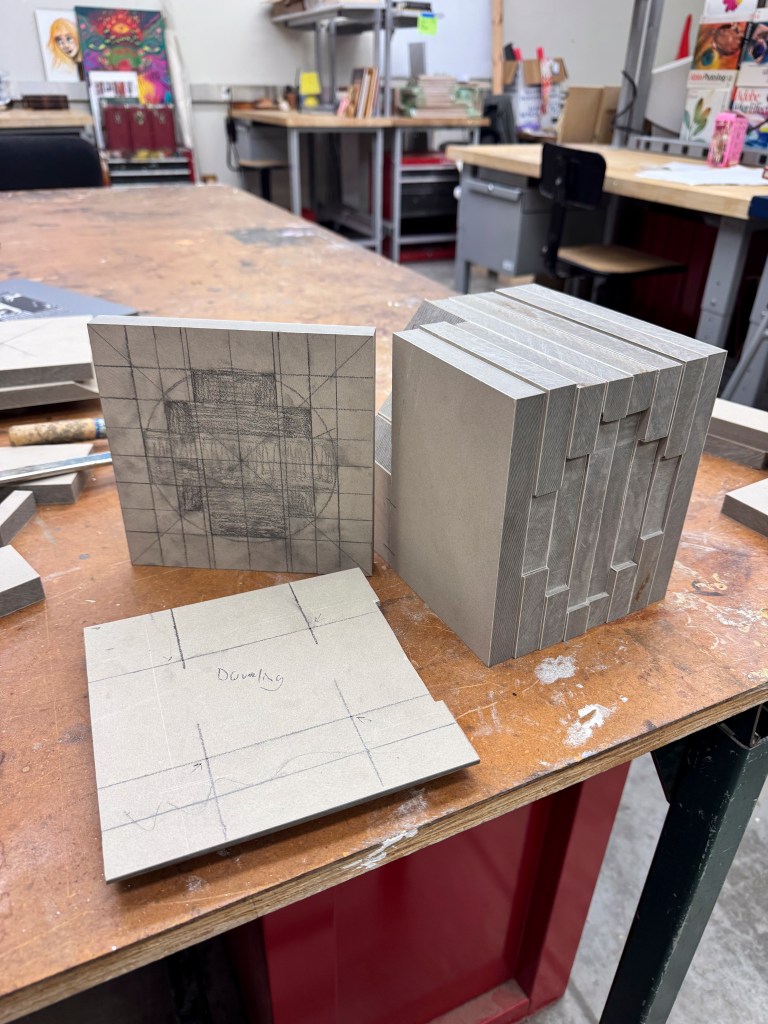
On the left, you can see a couple of quick patterns/jigs that were made for the project. The bottom is an alignment jig for doweling, while the top is a pattern for laying out the relief.
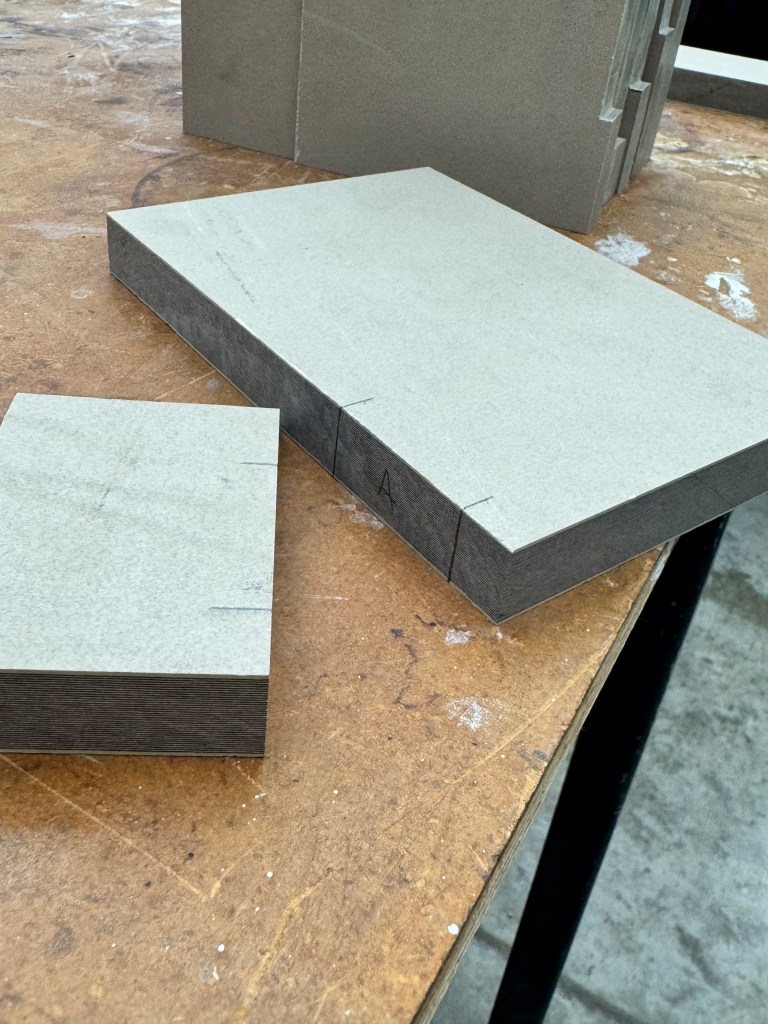
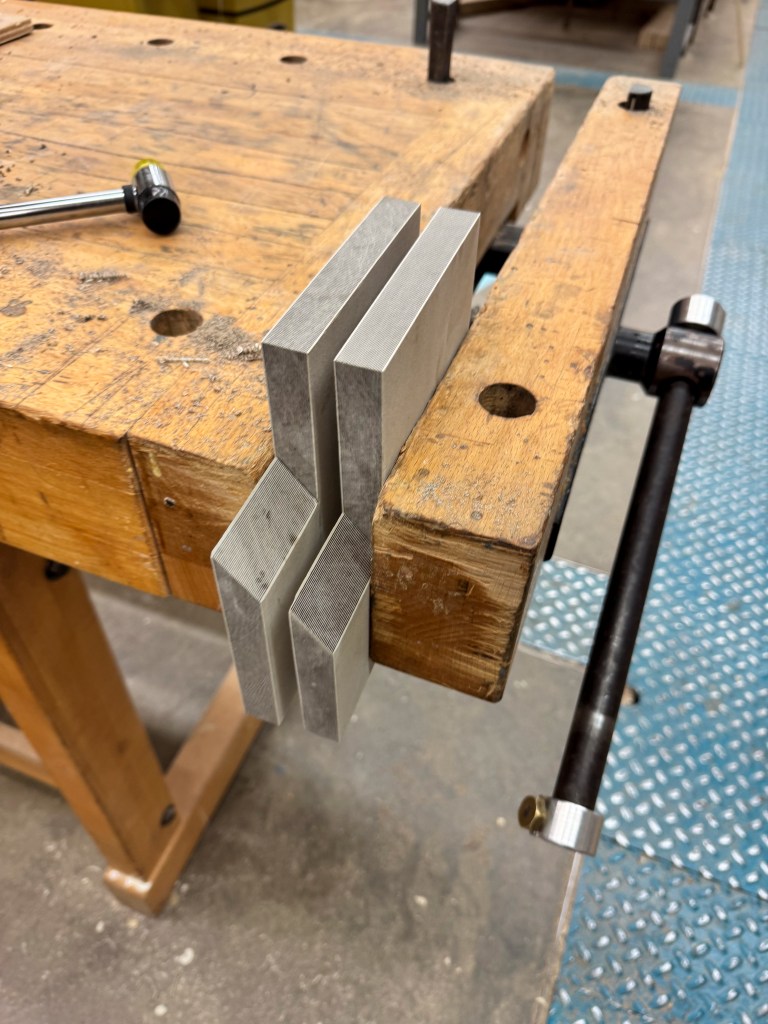
The connections were marked and dowelled before being clamped together in sections.
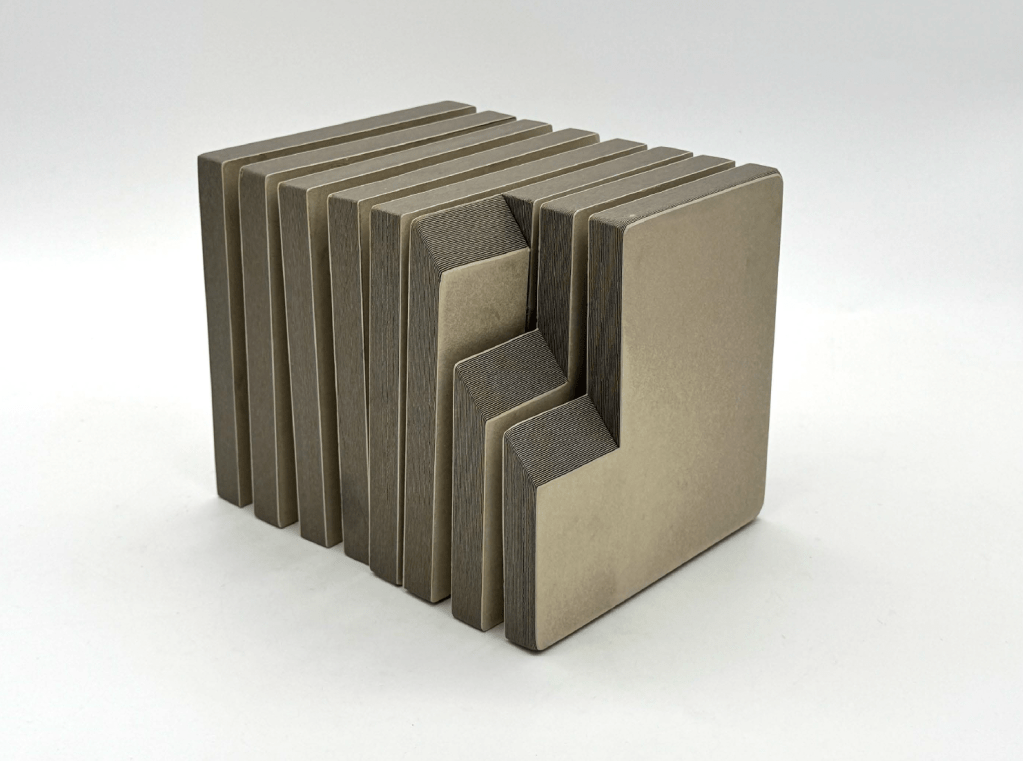
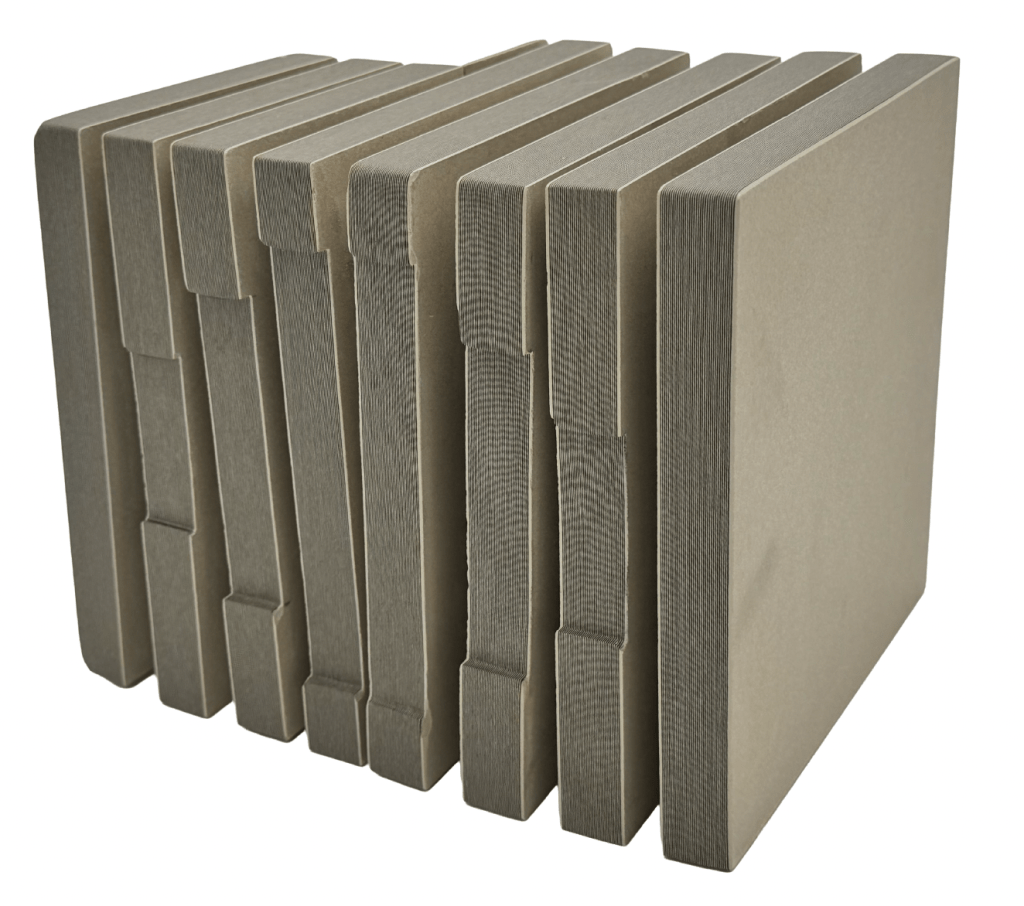
Reflection
The final physical prototype, shown above, debuted with mixed results. The material had some unexpected benefits – the surface, and especially the edges, were polished to a remarkable shine and smoothness, which was a highlight in the critique. The “radiator” effect comes across well in strong light. As for improvements to be made, there was no spacer for the layers (it relied on a dowel system). In the future, I would simply use a threaded rod with bushings between layers to maintain an even distance. There was also some slippage in the dowel jig, so the form significantly drifted out of square during clamping and gluing. A new dowel system would alleviate both of those issues. Lastly, the scale of the material could be adjusted. A different thickness may have turned out better, as the thickness of the panels affects the gaps between them when forming a cube. In the end, the project was enjoyable overall, and I’m thankful it taught me so much. I must say, though, I much prefer the render!
