“Create an outsourced estimate for a 20-25pc. production run boutique hotel product” – Advanced Materials and Manufacturing
What is a product that enhances the mindfulness rituals of Borgo Santo Pietro?
Borgo Santo Pietro is a boutique Italian hotel emphasizing mindfulness, health, and privacy. This assignment required the development of a small-run product to be outsourced for the hotel. The product was required to be easy to assemble with simple hand tools and have no more than 8 components. A minimum of three materials was also required.
In Siena, an 800-year-old villa sits on over 200 acres of cultivated estate. With over 300,000 plants on 13 acres of gardens, the scene is lush with greenery. Borgo Santo Pietro (BSP) is the result of a passionate restoration by Jeanette and Claus Thottrup, a Danish couple who discovered the property and sought to transform it into “a sort of nurturing haven of beauty and relaxation.”
Design Criteria
Notably, the restoration of the villa and expansion into a hotel were done faithfully with local artisans, honoring traditional techniques. An important element of the constraints for this project, the value of heritage materials is directly acknowledged. BSP also surveys global markets to procure antiques for furnishing. The property also features bespoke beds and hand-painted frescoes. The source of furniture and accessories ranges from artisans to design houses and mass producers.
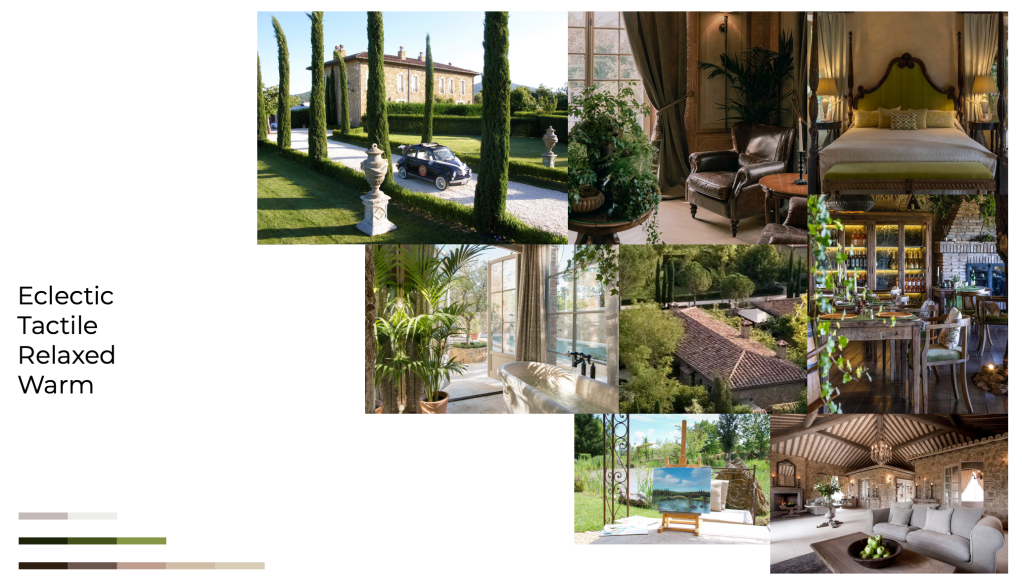
There is a clear influence of stone and wood in BSP’s image. Greenery is ever-present, and earthtones are nearly the exclusive palette. It’s a textbook eclectic hotel, with warm, tactile materials. BSP hosts a farm-to-table, Michelin-star restaurant, and the spa uses herbal treatments from the estate’s garden. There is a sense of ritual and peace that pervades the hotel. Specialized private suites are catered to individual experiences. Some may have a balcony, while others have a pool or garden. The spaces are designed for intimacy. It’s along this vein that the idea for a ritual object is formed.
Ideation
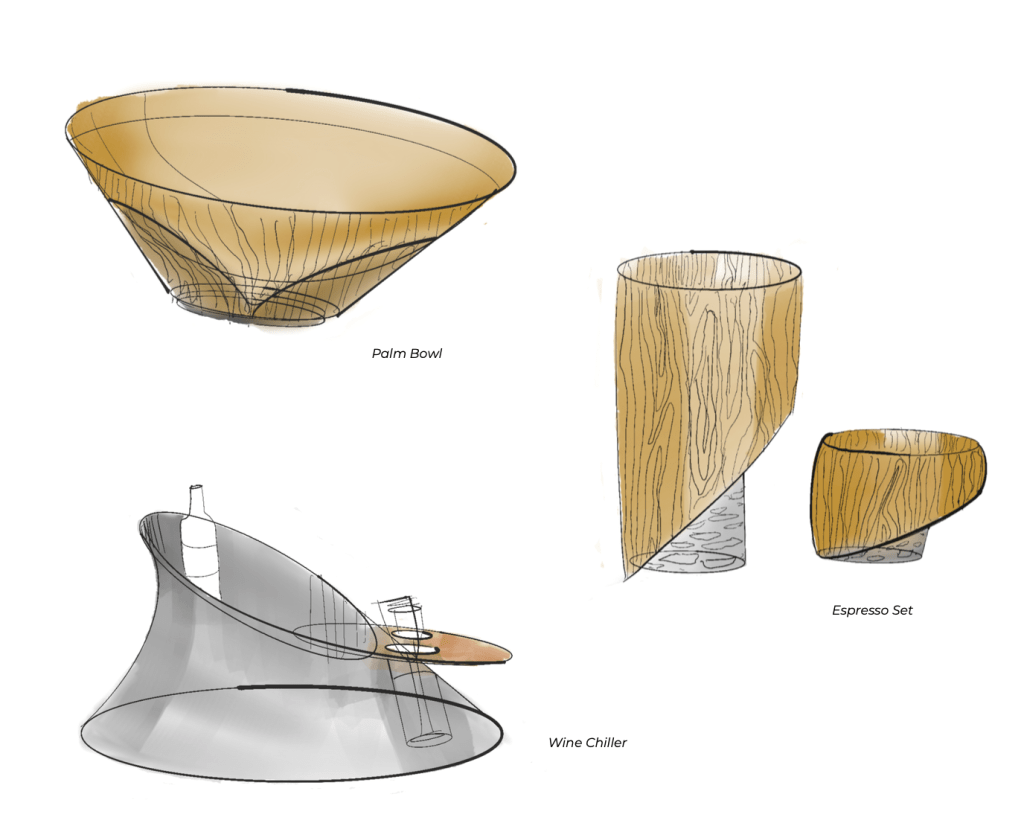
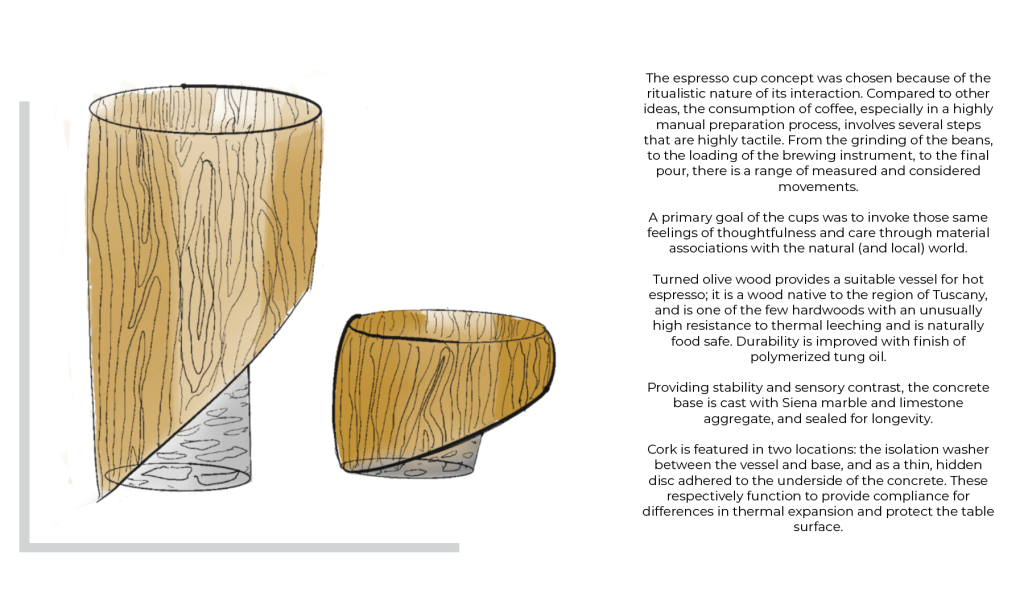
The Palm Bowl, pictured top left, is an object to create intimacy with the dining process. Bowls can be held, of course, but it’s not typically incentivized. The Palm Bowl is carved to create a grip location with a smaller circumference, intended to allow a grip more similar to that of a round-bottomed coffee mug – a “cupping” sensation.
In the bottom-left corner, a wine chiller is shown. It features a large stone base with a protruding table and storage for glasses. The idea here was to bring significance to the celebratory act by matching the grandeur of the chiller (the bearer of a tool for celebration) to that of the occasion. The chiller is oversized – the display location must be planned. It is a functional statement piece.
To the right is an espresso set. Both a smaller and a larger size are depicted to show the variable form language. Coffee immediately stood out as an option because many people already have an established ritual around it. So, running with the theme of the other two, the coffee cups create intimacy with the morning ritual. A weighty concrete base and wooden vessel provide support down low and a comfortable grip up top.
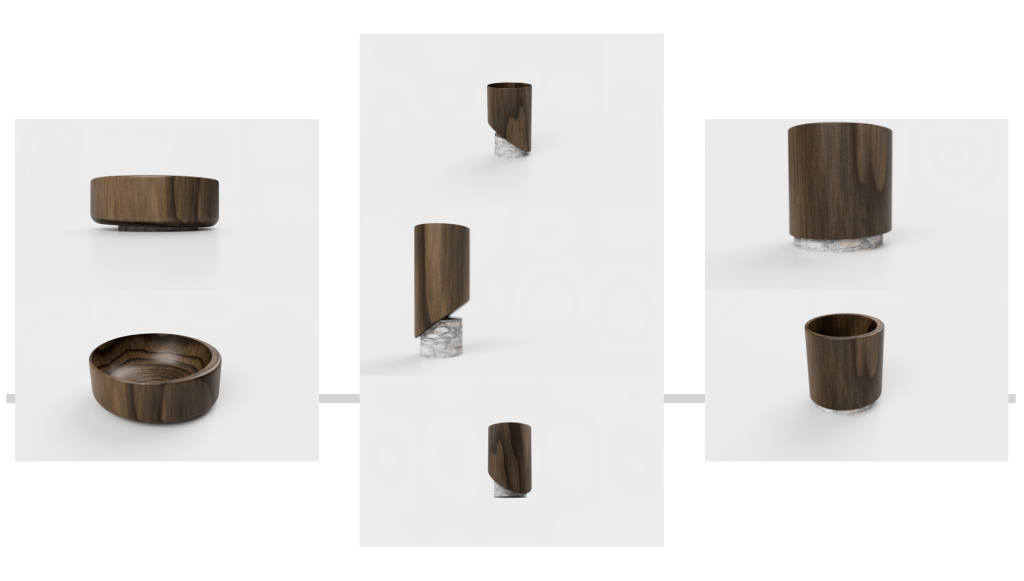
Below, a few of my favorite form iterations are showcased. To the left, a bowl concept. It’s inspired by the Palm Bowl and would have a much wider grip, though it may be a bit heavy to easily lift. The middle example is a skinnier version with some exaggerated height changes. To the right, there’s more of a cocktail-style cup, or maybe a handle-less mug? That focused on a wide base with a very small reveal, and a subtle sweep on the bottom edge of the wood.
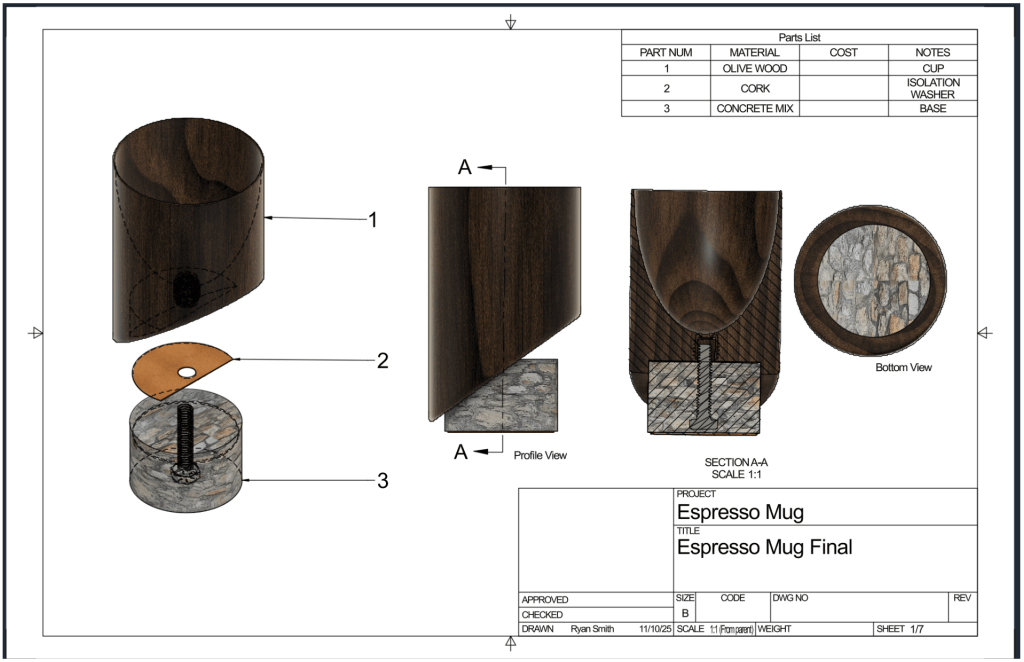
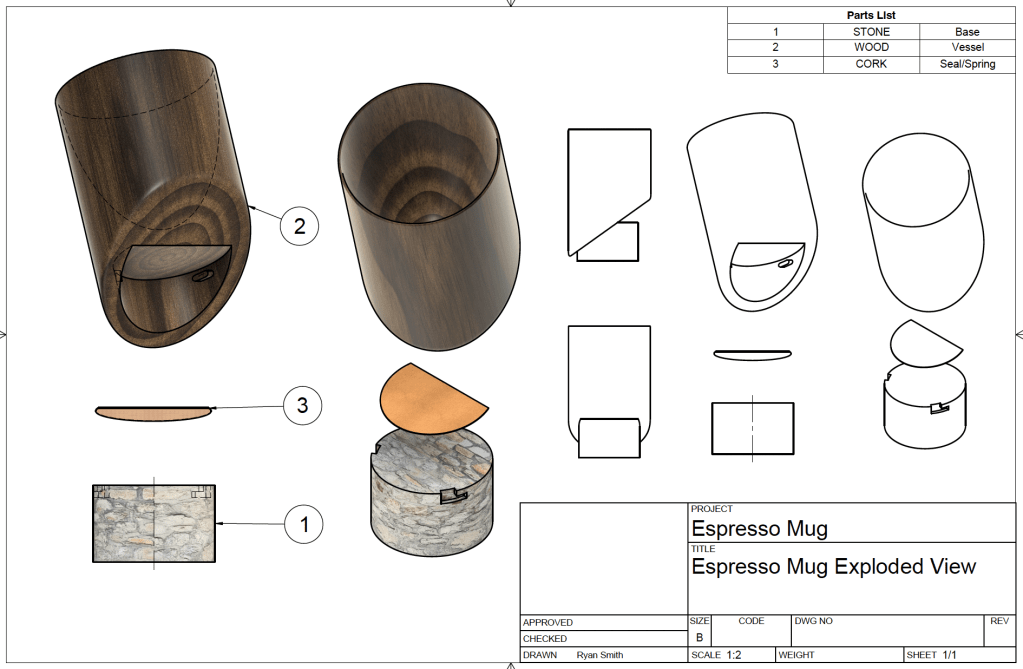
I fleshed out the design in Fusion a bit more, thinking about ways to join the materials while allowing for easy assembly. One idea I liked was the idea of a twist lock. The plan was to use cork as a spring between the stone and the wood, cut tabs into the wood, and cast channels into the concrete. See the image below for an exploded view.
I 3D printed a prototype TPU mold for the concrete casting test. The TPU was too stiff to release properly from the concrete in one piece, so the mold failed (it will be pictured shortly). After that, I created a two-part mold out of PLA. That did release from the mold, but the mix, at the correct aggregate size, did not retain sufficient detail to interact with locking tabs in a meaningful way. The trial led to a redesign. I thought of a cast-in-place solution, using a bolt to prototype, and a threaded insert in the wood – see drawing below.
This version led to another physical prototype. This one was cast with a cylinder mold and a jig to support a suspended bolt within the concrete.
Prototyping
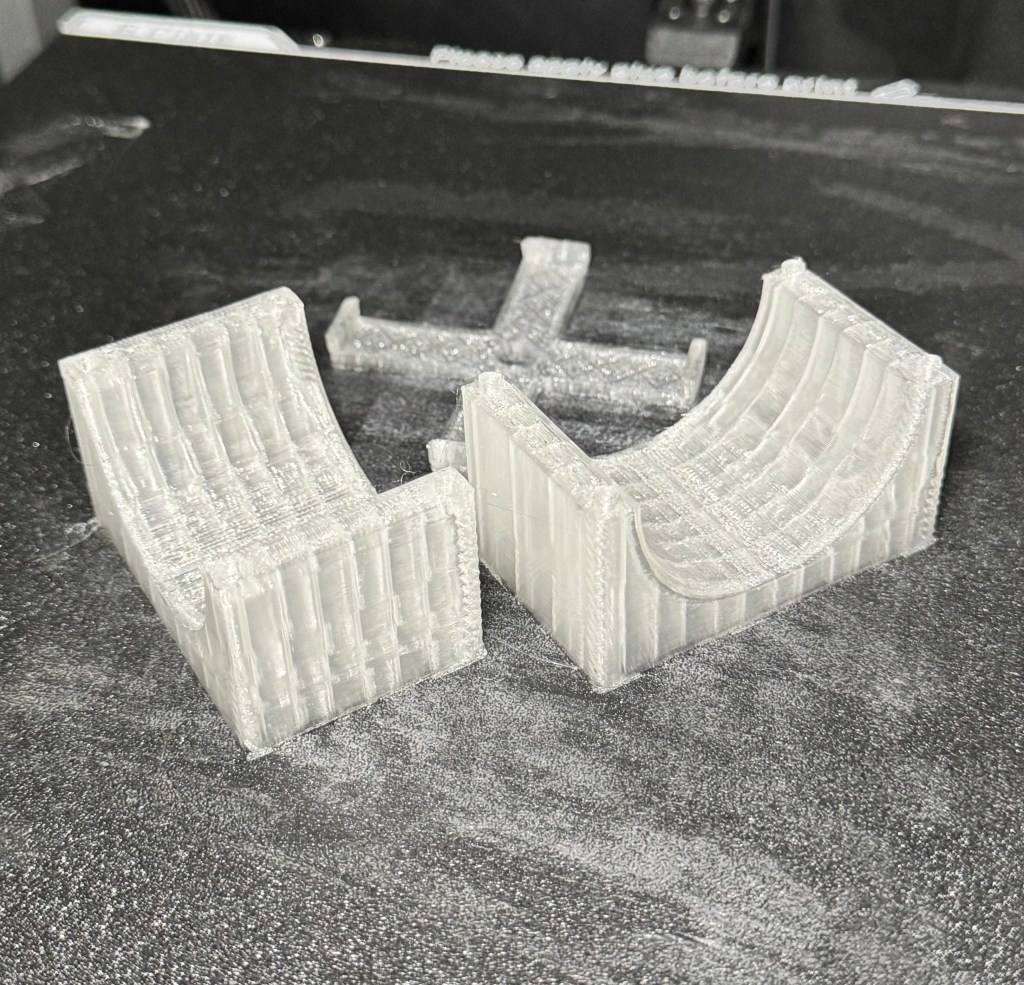
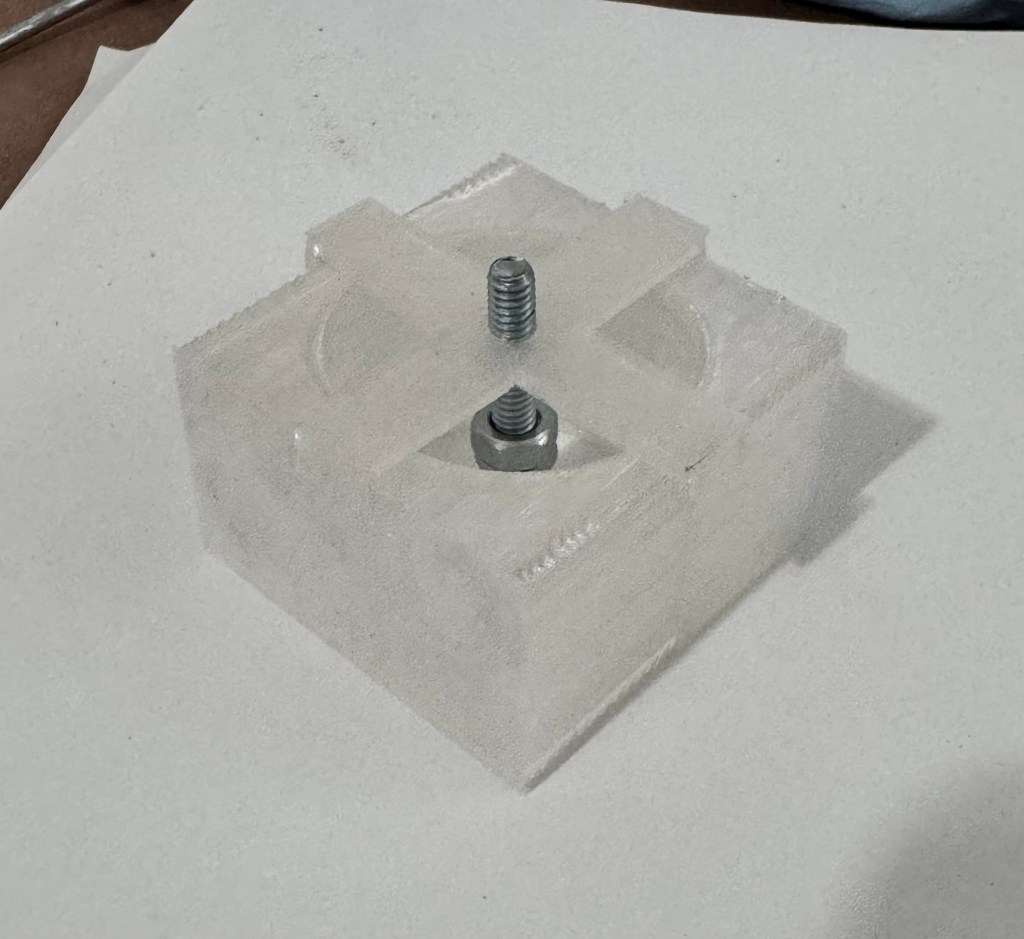
Above: Mold and bolt jig
Below: Assembled mold and bolt jig
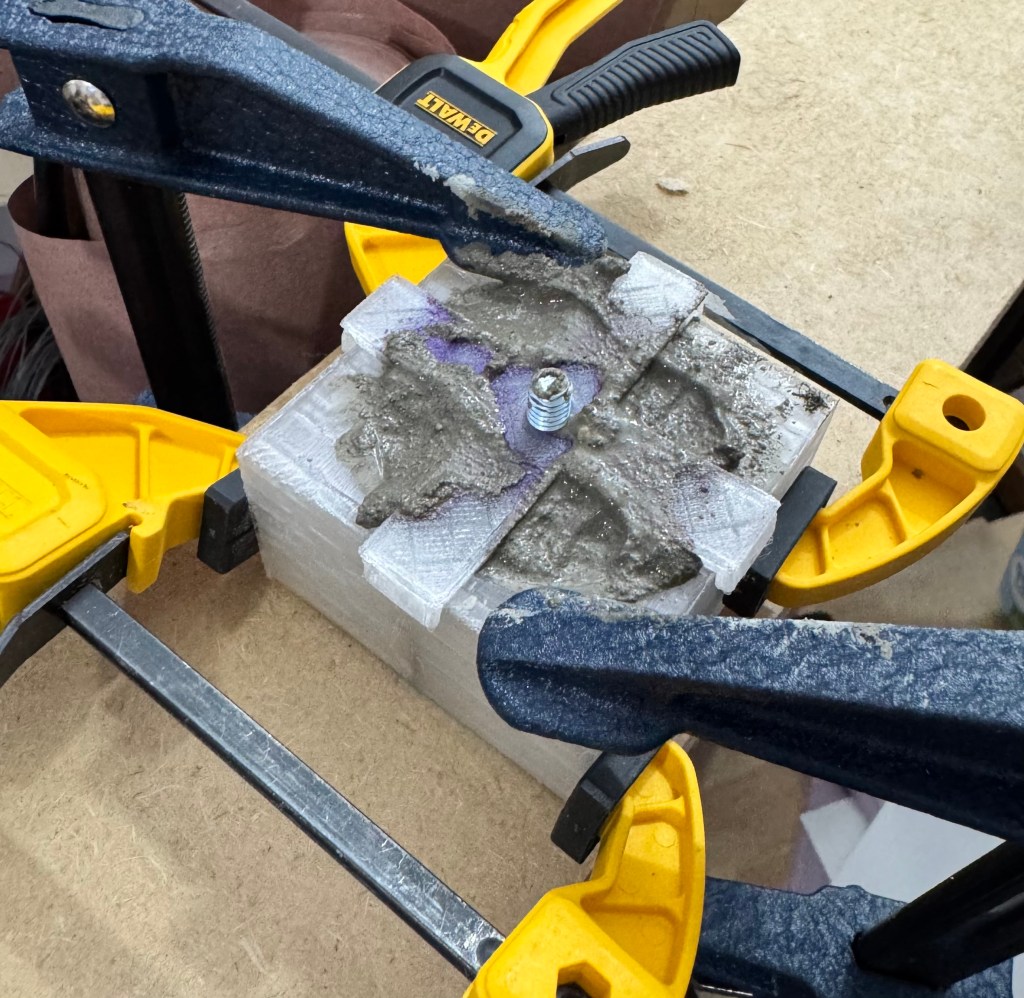
Above: Concrete casting test – mold clamped down to board and filled
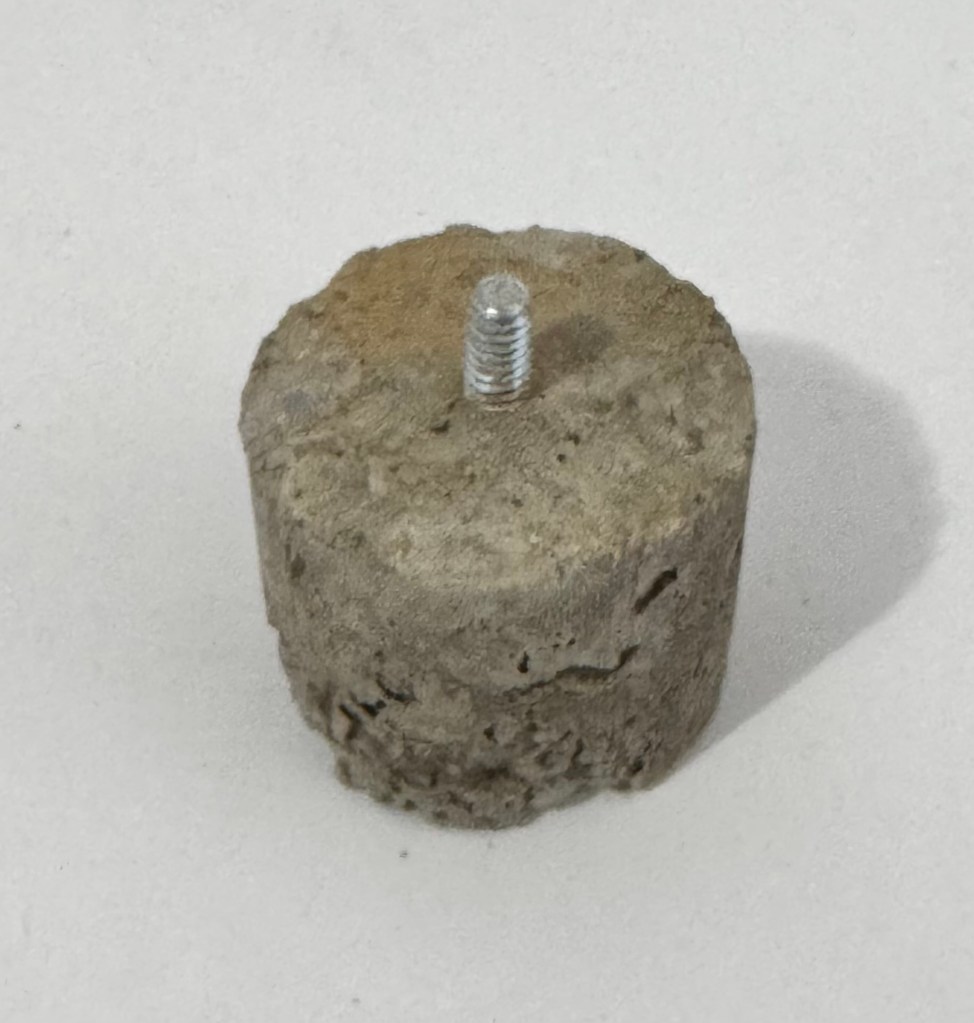
Out of the mold
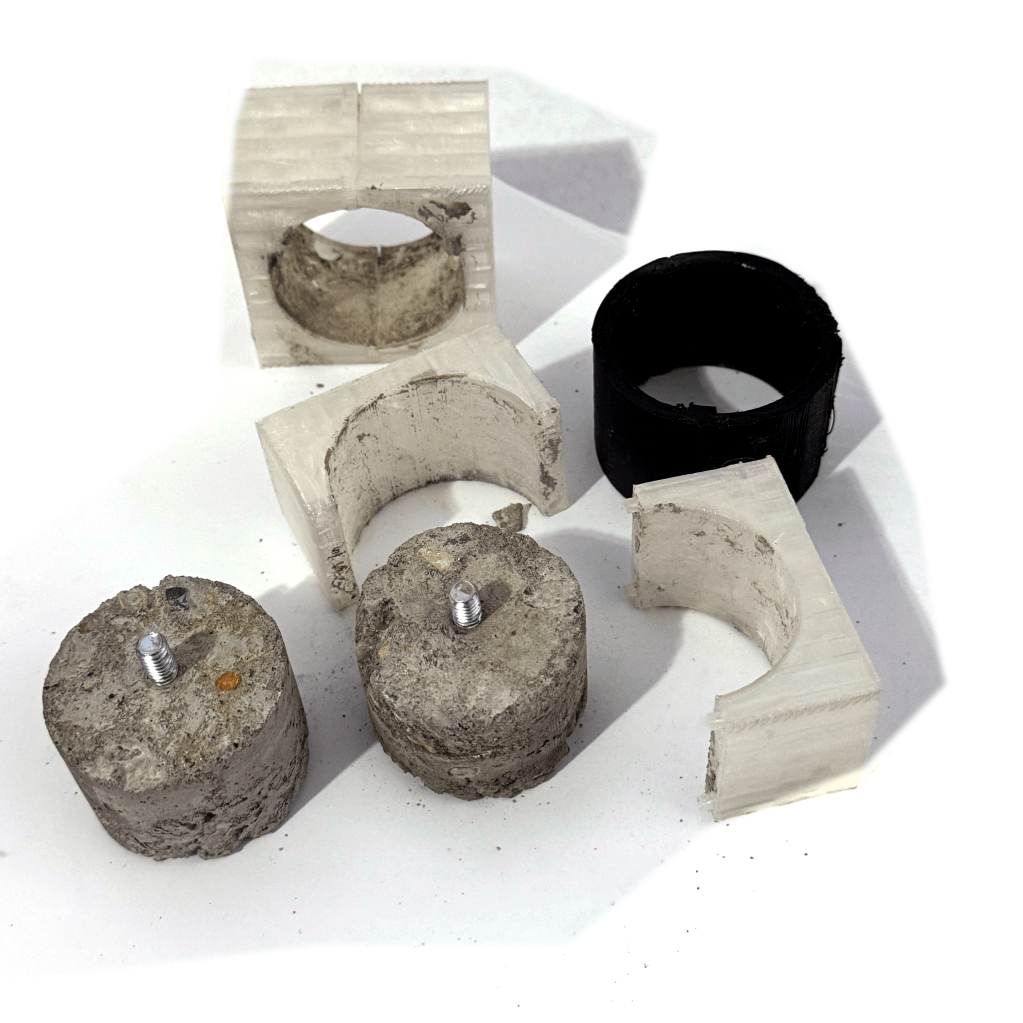
Mold variants and two casts
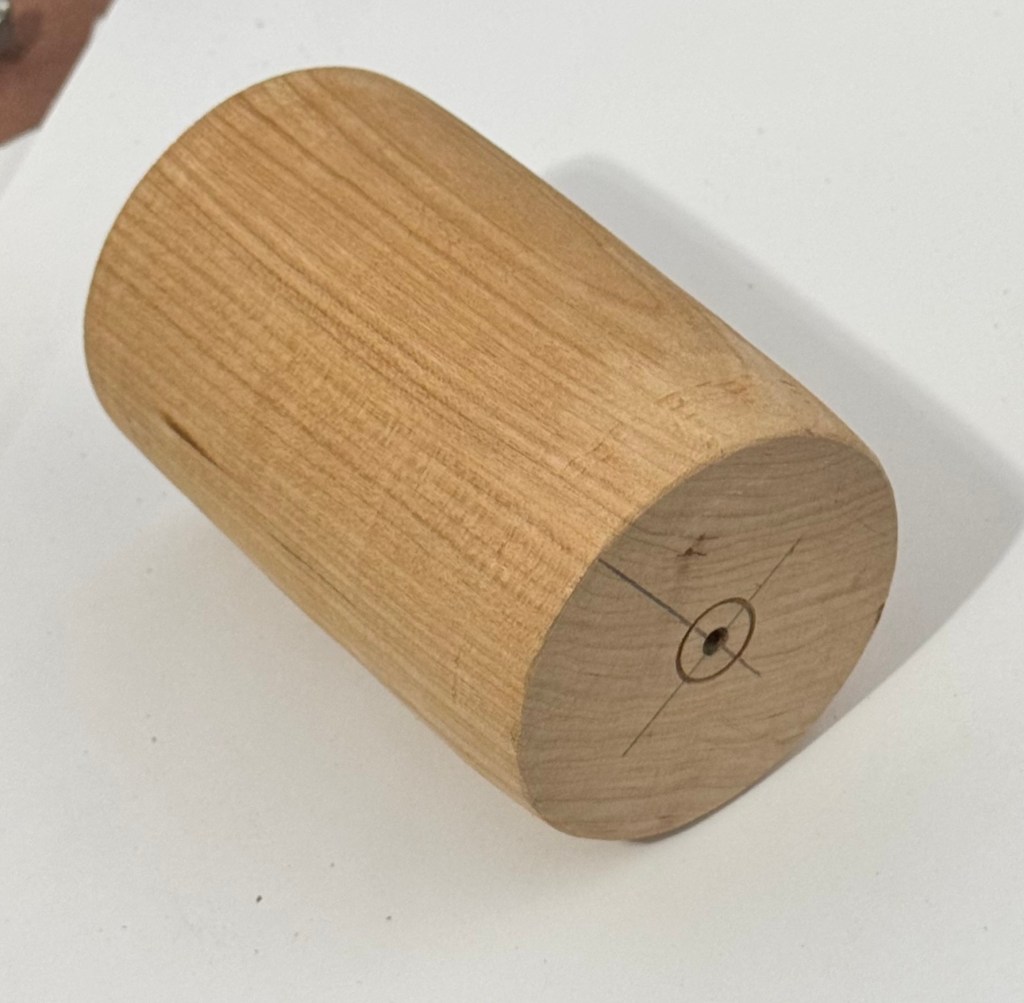
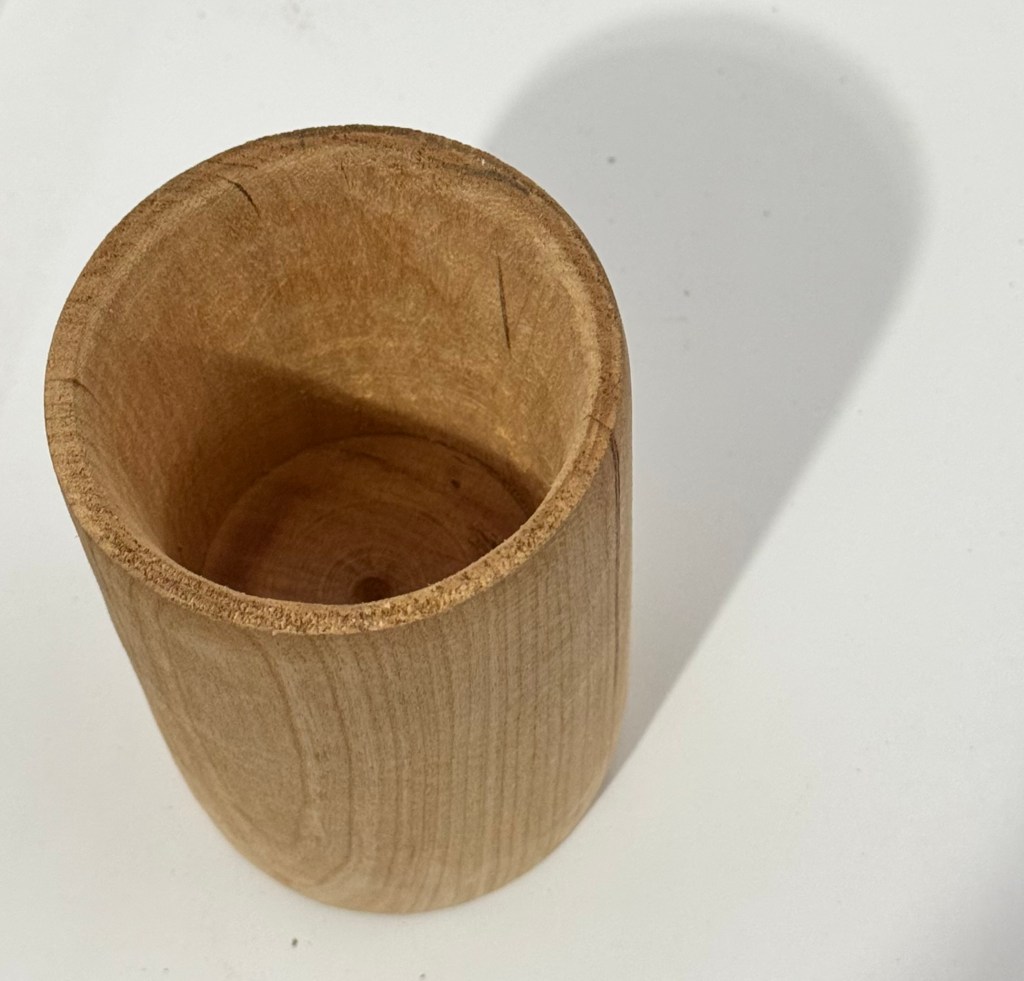
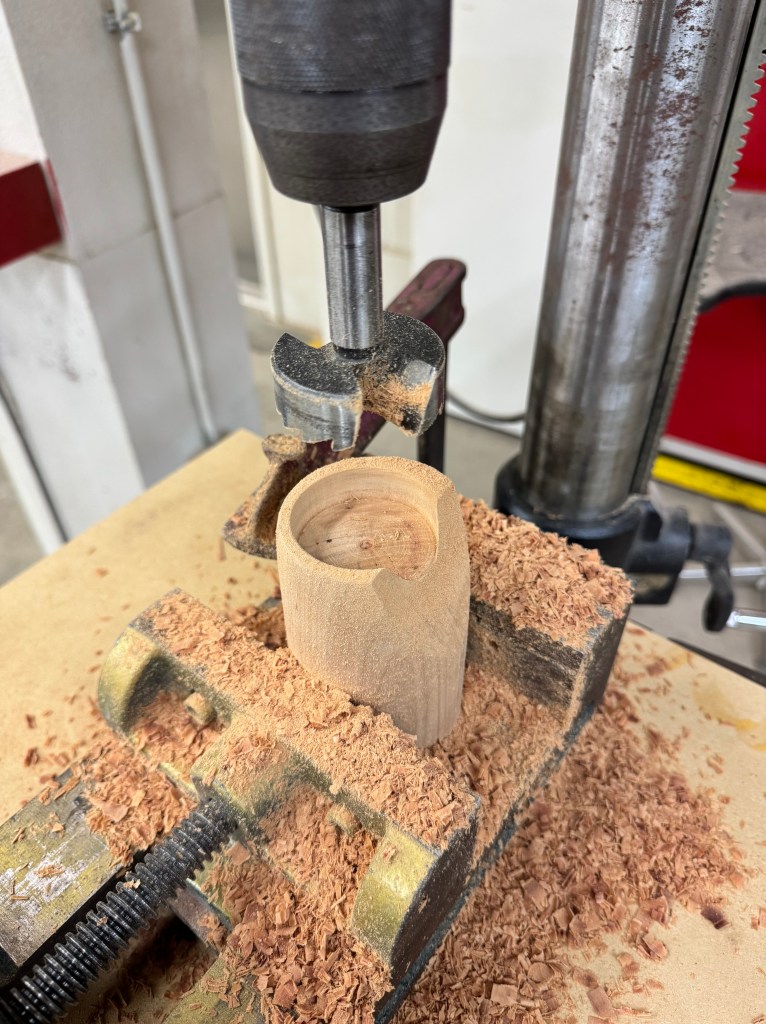
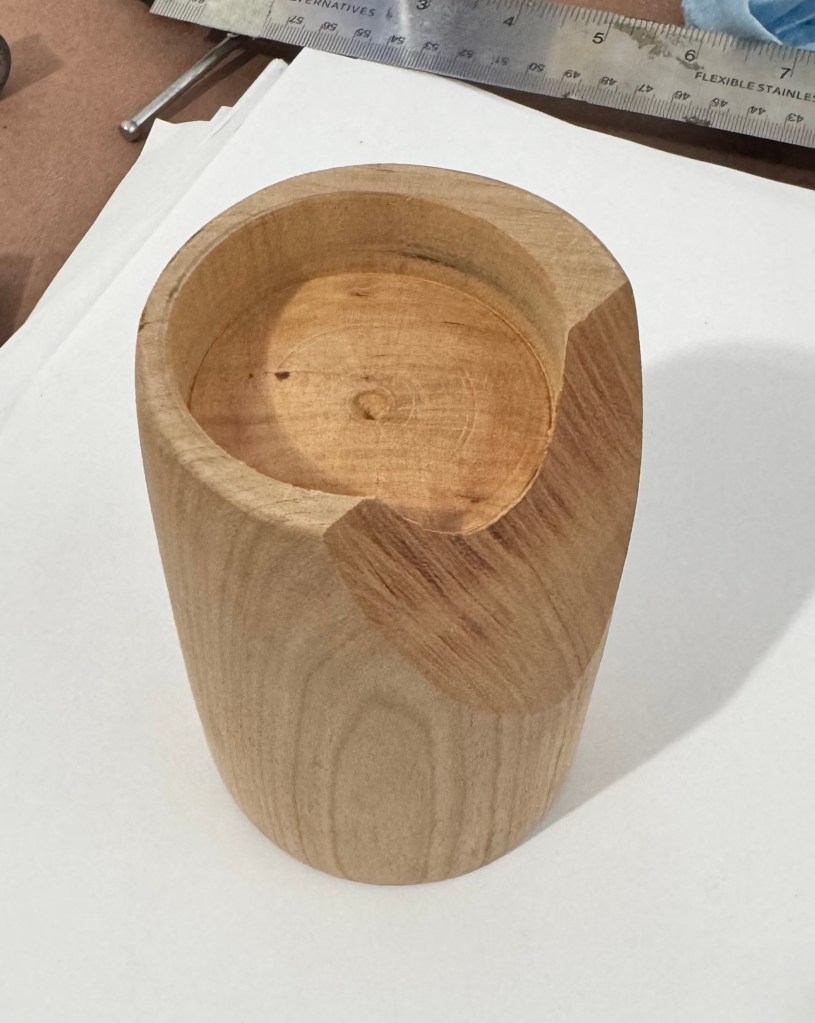
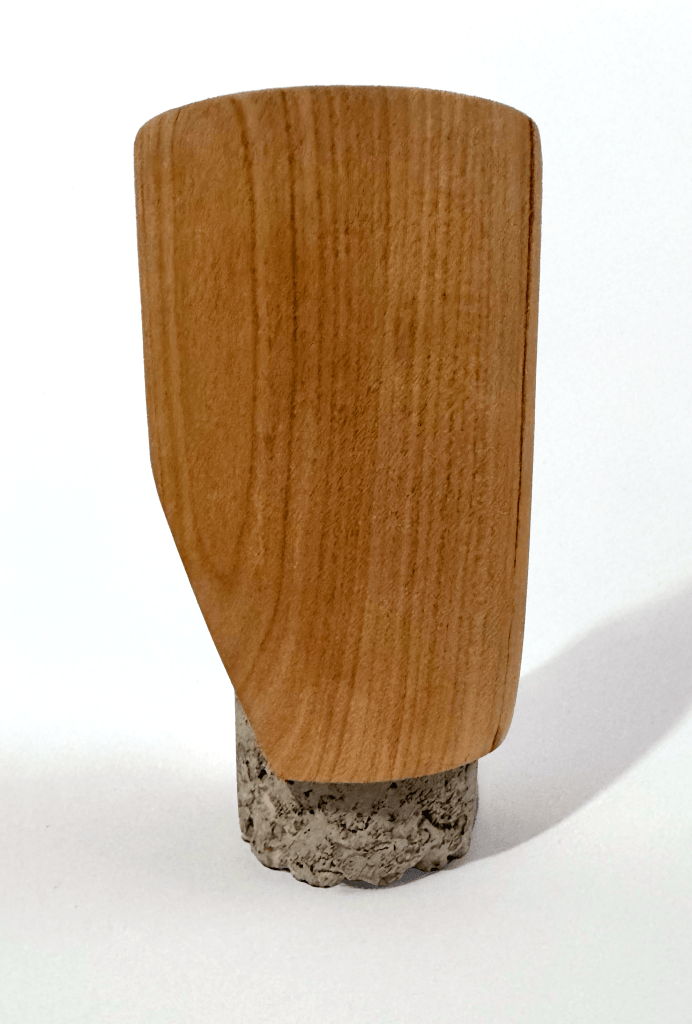
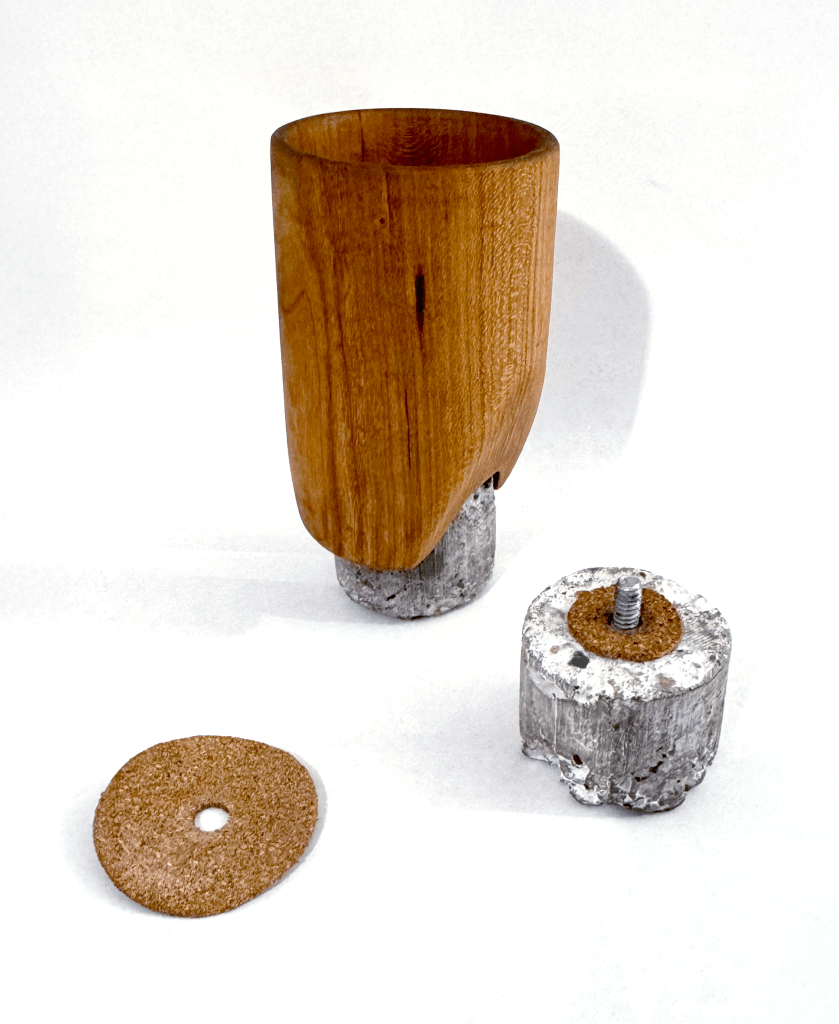
After the cup was test fit together, the wood was sanded to 220 and oiled. Cork washers are cut, and one is adhered to the underside of the base. The final cup is pictured below with two different cork washers.
Outsourcing Estimate and Assembly
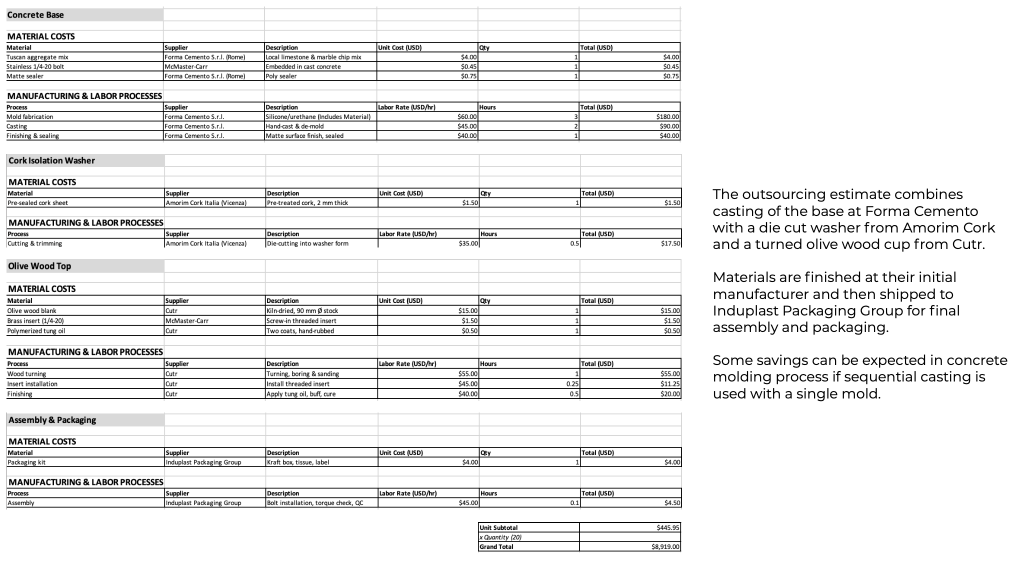
With a good handle on the production, an estimate was created for an order of 20 cups. There is a mix of local and outsourced labor. For the assignment, I used CUTR to handle the wood turning via CNC, while the concrete base is cast with local labor and materials. All materials are sourced in Italy.
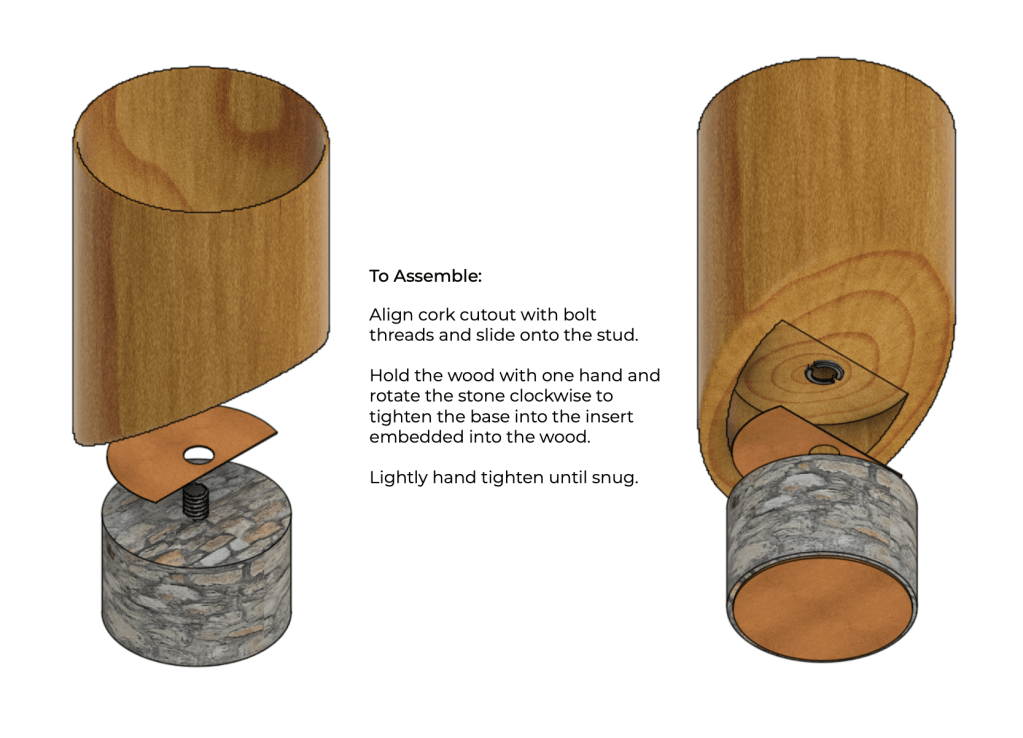
The only assembly instructions are as pictured above. No tools are required.
Reflection
This project, for Borgo Santo Pietro, was helpful for me to dive into making a heritage object with ritual value. A revision would include a revised attachment strategy for the cork on the underside of the base, and exploring other shapes for the base. I would also further experiment with chip size in the concrete mixture. The balance of the cup was quite successful, both when placed and when held. The reveal of the slanted cut in the wood is a comfortable place to rest a finger or two.
